Chief Joseph: The Man America Remembers for the Wrong Reasons
Forty Miles Short of Canada
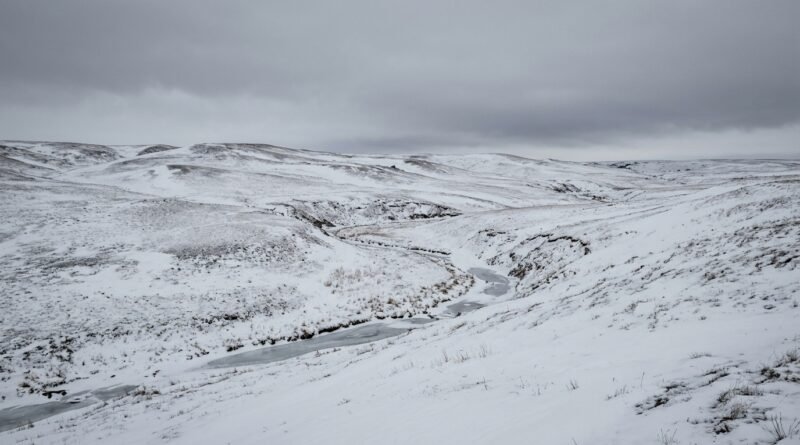
On 5 October 1877, in the freezing Bear Paw Mountains of northern Montana, about forty miles from the Canadian border, a Nez Perce leader the Americans called Chief Joseph surrendered to General Nelson Miles. Behind him were roughly four months of flight, somewhere between eleven hundred and thirteen hundred miles of country, and a trail of battles the U.S. Army had mostly lost.
America has been telling the story ever since, and getting most of it wrong.
Quick Answers
What was his real name?
Hinmatóowyalahtq̓it, usually translated as Thunder Rolling Down the Mountain. “Joseph” was a missionary name, inherited from his father.
Was he the war chief?
No. He led the camp and its noncombatants. Other men directed the fighting.
Did he ever get home?
Never. He died in 1904 on the Colville Reservation in Washington, still barred from the Wallowa Valley where he was born.
The Man the Newspapers Invented
The eastern press called him the Red Napoleon. It was a good headline and it was nonsense. Joseph was born in March 1840 in the Wallowa Valley of what is now northeastern Oregon, and within his own people he was a civil leader — responsible for the camp, for the old people and the children, for the horse herd on the move. The historian Francis Haines put it bluntly: Joseph was not a military man at all, and on the battlefield he had neither skill nor experience.
The men who actually ran the war have largely vanished from the popular story, which is its own kind of injustice. Looking Glass was the principal strategist for much of the flight. Ollokot, Joseph’s younger brother, led the warriors. Poker Joe, also called Lean Elk, set the brutal pace in the later stages. White Bird led his own band. Toohoolhoolzote was among the most militant. Three of those five were killed at Bear Paw.
The Flight, in Dates
| Date, 1877 | Event |
|---|---|
| mid-June | Flight begins after killings on both sides make war unavoidable |
| 17 June | White Bird Canyon, Idaho — a Nez Perce victory; some 34 soldiers killed |
| 11–12 July | Battle of the Clearwater, Idaho |
| 9–10 August | Big Hole, Montana — a surprise dawn attack; many of the dead were women and children |
| 20 August | Camas Meadows — a night raid carries off the Army’s stock |
| late August | The bands cross through Yellowstone National Park |
| 13 September | Canyon Creek, Montana |
| 30 Sept – 5 Oct | Bear Paw — siege in the snow, and surrender |
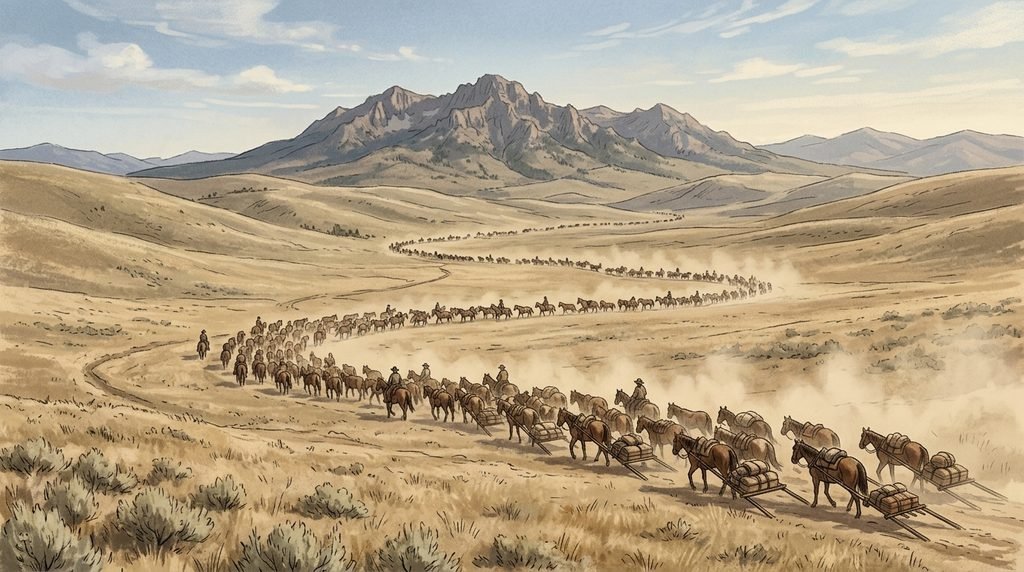
Around eight hundred people made that journey, of whom only about a quarter were fighting men. The rest were families, and more than two thousand horses. That is the detail worth holding on to: this was not an army retreating. It was a nation moving, with its grandmothers and its infants, outmaneuvering professional soldiers for four months.
About That Speech
Every American schoolchild has met the ending: From where the sun now stands, I will fight no more forever.
Here is what the record actually shows. The words were written down by Lieutenant Charles Erskine Scott Wood, an aide to General Howard who was present at the surrender. Joseph did not speak them in English; accounts describe the message passing through intermediaries and a translator. Wood published his version years afterward, and Wikipedia’s summary of his career is generous in saying he “transcribed, and perhaps embellished” it. The historian Mark H. Brown, whose 1967 study of the flight remains standard, was harsher — he wrote that the scene of Joseph handing over his rifle while Wood stood by with pencil and pad does not contain a word of truth.
So the most famous sentence in Native American history is, at best, a translated paraphrase shaped by a U.S. Army officer with literary ambitions. The sentiment may well be Joseph’s. The prose is probably Wood’s. Both things can be true, and neither makes the surrender less real.
What Happened Next Is the Part Nobody Tells
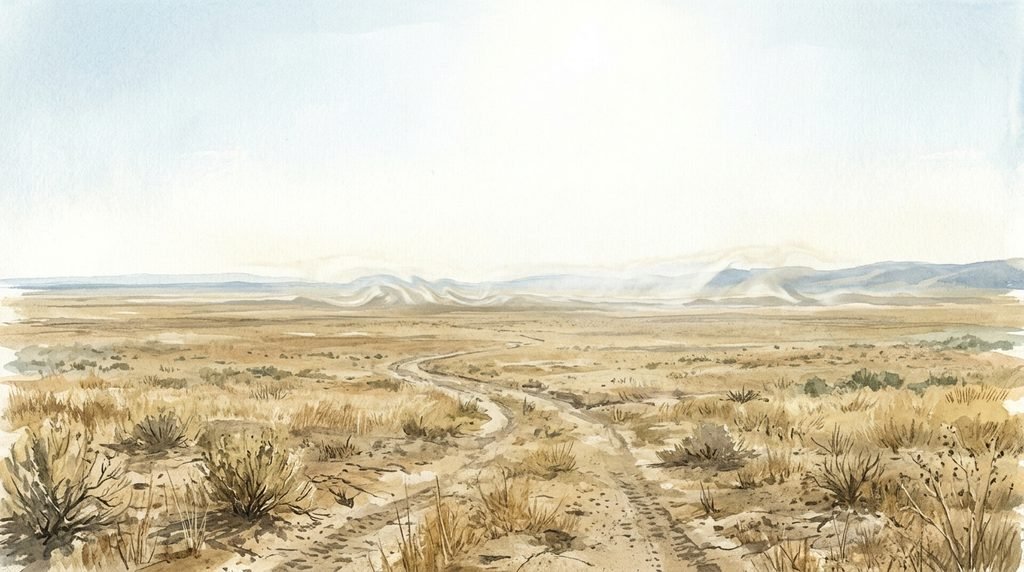
Miles promised the survivors they would be returned to Idaho. The promise was overruled. Instead, roughly four hundred and thirty people were shipped that winter to Fort Leavenworth, Kansas, and in 1878 moved on to Indian Territory in what is now Oklahoma — hot, flat, low-lying country utterly unlike the mountain valleys they came from. The Nez Perce called it Eeikish Pah, the hot place.
They died there. The survivor Yellow Wolf said afterward that the climate alone killed many of them, that every newborn died, and many of the old people with them. Reliable sources do not give a clean number, and this article will not invent one. The qualitative record is unambiguous enough.
Meanwhile Joseph did the only work left to him. He traveled to Washington. He spoke publicly. He petitioned President Hayes in 1879 and was still petitioning by the time he met Theodore Roosevelt in 1903. After eight years the survivors were finally allowed back to the Northwest in 1885 — but Joseph himself was judged too controversial to settle among Idaho settlers, and was sent instead to the Colville Reservation in Washington.
He died there on 21 September 1904. The story that his physician recorded the cause as a broken heart is repeated everywhere and traceable to nowhere firm; treat it as legend rather than record. He is buried at Nespelem, Washington, several hundred miles from the valley he spent twenty-seven years trying to get back to.
Two Men, One Name
One frequent confusion is worth clearing up. His father, Tuekakas — Old Chief Joseph — was a different man, who died in 1871. He was buried in the Wallowa Valley, his grave was desecrated, and in 1926 he was reinterred near Wallowa Lake at Joseph, Oregon. Articles that blur father and son into one long-lived chief are describing a person who never existed.
Why He Deserves Better Than the Legend
The Red Napoleon story is flattering in the way that costume is flattering. It turns a political leader into a battlefield genius, and a twenty-seven-year campaign of argument, petition and public speech into one photogenic afternoon in the snow.
What Joseph actually did was harder than generalship. He kept a community alive through a catastrophe, and then he spent the rest of his life in rooms full of men who held all the power, making the same case over and over, mostly losing, and never stopping. That is not a lesser story. It is simply a story that does not fit on a poster.
Sources
- National Park Service, Nez Perce National Historical Park — Aftermath of the Flight of 1877 and Old Chief Joseph Gravesite History
- National Park Service, Nez Perce National Historic Trail
- National Park Service, Bear Paw Battlefield park brochure
- Mark H. Brown, The Flight of the Nez Perce, 1967
- Francis Haines on Joseph’s military role, as cited in standard biographies
- Nez Perce Tribe, official website, History and Culture
Related: Sarah Winnemucca: the voice that crossed a continent